Start from the stages, not the artists
Draft each stage as its own day first: openers, peak, close. Then lay the stages side by side and look for the hours where two peaks meet. Those are your candidate clashes.
Let the audience tell you which clashes matter
Once the lineup is announced, people start saving sets. Two artists saved by the same people at the same hour is a clash your audience will feel. Two popular artists saved by different people is not.
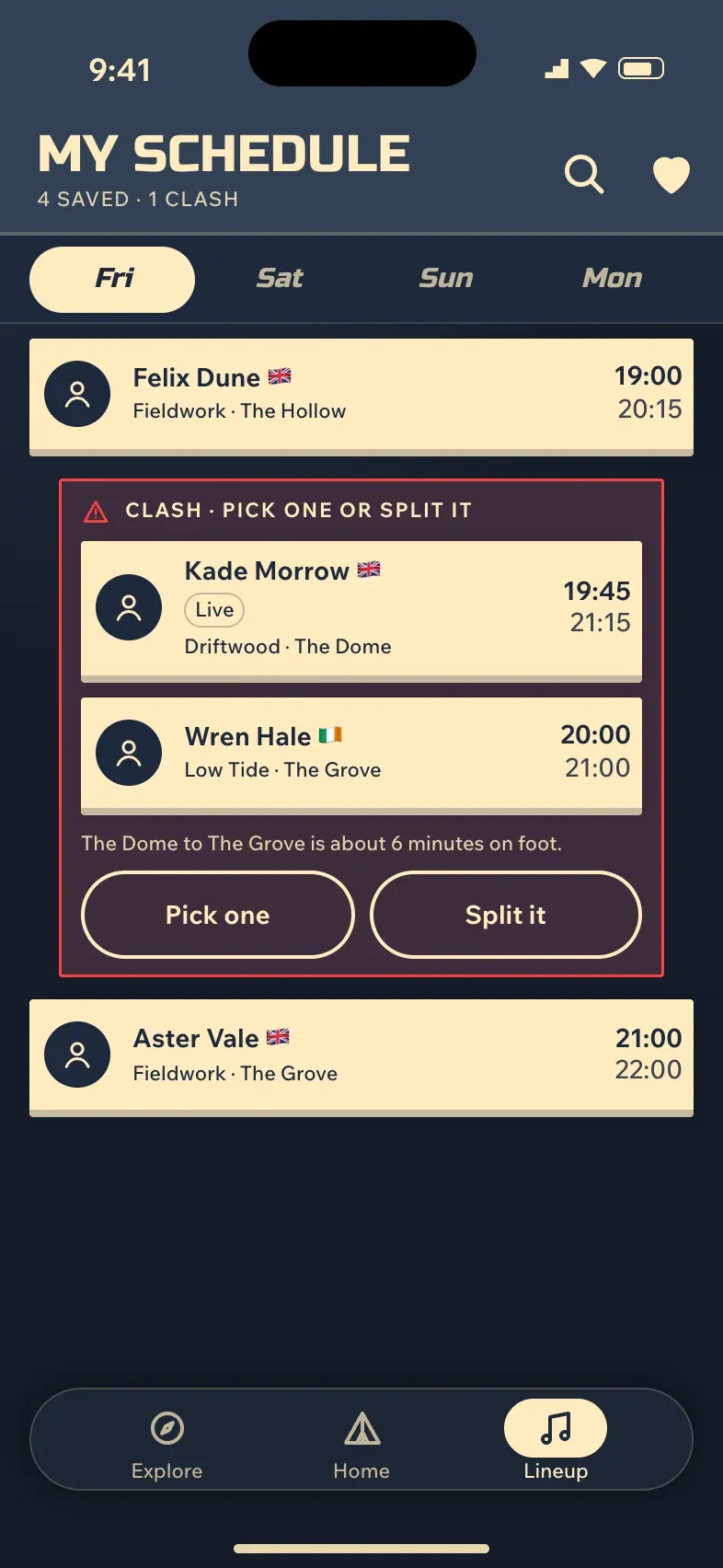
What your audience sees. Flux groups overlapping saved sets with the walk between stages, so each person decides once rather than discovering it on the day.
In the Flux portal, the schedule conflicts table lists overlapping sets ranked by how many saves the two sets have between them. Fix from the top while set times can still move.
Leave walking time
A ten minute gap between the end of one set and the start of the next is not a gap if the stages are a fifteen minute walk apart. Plan changeovers with the site map open.
Publish the timetable early
The sooner set times are out, the sooner people save, and the sooner you can see the clashes. A lineup without times gives you nothing to read.
Free for the 2027 season. Paste the lineup, publish when you are ready.